≡ Menu

Good ‘Ole Apple Pie

Apple Pie has been done, done, and done again. If you skim anyone’s list of cookbooks or blogs, you’ll find infinite declarations of how to make apple pie. Some claim to have the definitive recipe. Since I have never (to the best of my memory) actually made an apple pie, start to finish, from scratch, I’m certainly not going to promise that the results of this first attempt are worth repeating. However, I can say that I learned a great deal, and I’m positive that this post will impart at least one valuable apple-pie baking recipe (which so many others have discovered before I did): apple pies are best with regular top crusts. The lattice doesn’t trap enough of the steam inside, and the apples either don’t cook through, or don’t get coated with that lovely apple pie sludge. Next time, I’ll forgo the beautiful lattice and stick to the easier top crust. Save your lattices for berry pies and other juicy things.

That said, the sludge that this pie produced (in my humble opinion) perfectly balanced sweet and tart. The apples were soft but still toothsome, and the syrup that oozed from each slice was delightful. By the time the pie was actually gone, the dish needed very little scrubbing, as I’d been sneaking fingerfuls of the goo all along.

Here’s the info about my pie, element by element:

The Crust
It’s fashionable to avoid transfats these days. They’re pretty darn bad for you, and you’re definitely better off with butter. Plus, never growing up with much margarine or shortening in the house, they freak me out a bit, and I tend to associate them with spam and other such delicacies. However, Friday night dinner was meat, so I couldn’t use butter in the crust, and frankly, oil is simply an unacceptable substitute in proper pie dough, so I caved and used margarine. I now understand why people use it, scary as it may be: it produces a perfectly flaky dough that’s neither tough or overly dense. I’d say I’d do it again, but I won’t. Hey, it was good while it lasted.

As for the lattice top, it’s really not as complicated to make as it looks. An instructional video can be found here. Basically, the methodology is as follows: cut 16 1/2-inch strips from your second disk of rolled-out dough. Lay eight of them across the pie in one direction, equidistant from each other. Now, fold every other strip back over itself almost all the way, and lay down your first crossing strip. Unfold the folded strips over, and fold the other strips over themselves (that is, every other strip, but the ones that run under the first cross strip). Now, lay the next strip down. Unfold the folded strips, fold the unfolded strips, and lay down the next cross strip. Keep alternating this way until all strips are laid, and you’ll find a perfect lattice crust.

The apples
People are so particular about which apples to use in a pie. These taste better, these hold their shape better, those are just horrible in pies, etc. I say, there’s no such thing as an apple that’s horrible in pies. They’re all pretty darn good. So I picked up the “seconds” at the farmers market: with a couple of bruises here and there, seconds run about 89 cents a pound — not bad for farm-fresh apples. It turns out that I used a mix of braeburn, honeycrisp, jonathan, and jonagold, and I was very pleased. The verdict? Use whatever’s in the fridge. Just stay away from red delicious which taste less-than-wonderful and macintosh, which get kinda mushy.


The add-ins
I’m a big fan of quinces. The little suckers will give you quite a run for your money if you dare try to peel or (gasp!) slice them up, but once chopped, sugared, and cooked, quinces elevate any old apple pie and impart an unparalleled complexity of flavor. Quinces should be sauteed before added to pie, as they take longer to cook than apples (and are quite unpleasant if undercooked). I like to boil them in a very diluted simple syrup with a bit of vanilla and cinnamon.


Basic Flaky Pie Crust
adapted from The Pie and Pastry Bible (© 1998 Cordon Rose, Inc.) by Rose Levy Beranbaum

(Pastry for a 9-inch lattice pie, a 9-inch deep-dish pie, a 10-inch pie shell, or a 12- to 14-inch free-form tart

  • 9 tablespoons unsalted butter or margarine, cold
  • 1 1/2 cups (dip and sweep method) bleached all-purpose flour
  • 1/4 teaspoon salt
  • 3 1/2 to 4 1/2 tablespoons ice water
  • 1 1/2 teaspoons cider vinegar
  • 1/8 teaspoon baking powder (optional, and I didn’t use it; if not using, double the salt)
  1. Divide the butter into two parts, about two thirds to one third: 6 tablespoons and 3 tablespoons.
  2. Cut the butter into 3/4-inch cubes. Wrap each portion of butter with plastic wrap, refrigerate the larger amount and freeze the smaller for at least 30 minutes. Place the flour, salt, and (optional) baking powder in a reclosable gallon-size freezer bag and freeze for at least 30 minutes.
  3. Place the flour mixture in a food processor with the metal blade and process for a few seconds to combine. Set the bag aside.
  4. Add the larger amount of butter cubes to the flour and process for about 20 seconds or until the mixture resembles coarse meal. Add the remaining frozen butter cubes and pulse until all of the frozen butter is the size of peas. (Toss with a fork to see it better.)
  5. Add the lowest amount of the ice water and the vinegar and pulse 6 times. Pinch a small amount of the mixture together between your fingers. If it does not hold together, add half the remaining water and pulse 3 times. Try pinching the mixture again. If necessary, add the remaining water, pulsing 3 times to incorporate it. The mixture will be in particles and will not hold together without being pinched.
  6. Spoon the mixture into the plastic bag. (For a double-crust pie, it is easiest to divide the mixture in half at this point.)
  7. Holding both ends of the bag opening with you fingers, knead the mixture by alternately pressing it, from the outside of the bag, with the knuckles and heels of your hands until the mixture holds together in one piece and feels slightly stretchy when pulled.
  8. Wrap the dough with plastic wrap, flatten it into a disc (or discs) and refrigerate for at least 45 minutes, preferably overnight. (For a pie shell and lattice, divide it in a ratio of two thirds:one third — use about 9.5 ounces for the shell and the rest for the lattice, flattening the smaller part into a rectangle.)
  9. Store, refrigerated, up to 2 days; frozen, up to 3 months.
  10. The Pastry Bible’s explanation of what’s goin’ on:

    Pastry flour offers the most tenderness while maintaining flakiness, but it is the addition of vinegar that relaxes the dough without losing flakiness, making it easier to roll, shrink less, and be even more tender. The baking powder lifts and aerates the dough slightly without weakening it, but it makes it seem more tender.

    Thes secret to success is finely incorporating about two thirds of the butter into the flour, which keeps the flour from absorbing too much water and forming gluten, which would make the crust tough. The remaining one third of the butter is incorporated in larger pieces, which serve to seperate the layers, resulting in the desired flakiness. This pie crust does not shrink or distort as much as the standard all-butter crust because there is less gluten development.

    If when adding the water, you find you need more than indicated in the recipe, chances are you haven’t moisture-proofed the flour adequately (you haven’t used the correct amount of butter or processed it fine enough), leaving the flour free to absorb more liquid. The resulting crust will be flakier but less tender.

    If you find you need less water than specified in the recipe, chances are you divided the butter incorrectly and used too much of it to moisture-proof the flour, preventing it from absorbing an adequate amount of water. The resulting crust will be more tender but not very flaky.

    Flattening the newly formed dough into a disc or discs before refrigerating makes it easier to roll without cracking. The dough is refrigerated to relax the gluten, making it less elastic and easier to roll. Chilling also firms the butter, preventing sticking and the need for extra flour when rolling, which would toughen it. Dough that has rested overnight before baking shrinks less.

Apple Pie adapted from Deb at Smitten Kitchen

  • 3 1/2 lbs apples (about 8)
  • 1 quince
  • 1 vanilla bean, split lengthwise, or one dash vanilla
  • 2 cups water and 1/4 cup sugar
  • 2 tablespoons juice and 1 teaspoon zest from 1 lemon
  • 3/4 cups sugar
  • 2 tablespoons all-purpose flour
  • 1/4 teaspoon salt
  • 2 teaspoons cinnamon
  • 1/2 teaspoon ground nutmeg
  • 1/2 teaspoon ground allspice

  1. Over medium heat, combine 2 cups water, 1/4 cup sugar, and vanilla. Stir until sugar dissolves. Peel and chop quince, removing the core. Add sliced quince to simple syrup and cook over medium for about 20 minutes, until quince pieces are soft-ish.
  2. Adjust oven rack to lowest position and heat rimmed baking sheet and oven to 500 degrees. Remove one piece of dough from refrigerator (if refrigerated longer than 1 hour, let stand at room temperature until malleable).
  3. Roll dough on lightly floured work surface or between two large sheets of wax paper, to about 1/2-inch thick. Fold dough in half, then over itself again into quarters, and transfer dough to pie plate, placing dough point in center of pie plate and unfolding. Working around circumference of pie plate, ease dough into pan corners by gently lifting dough edges with one hand while pressing around pan bottom with other hand. Leave dough that overhangs lip of plate in place; refrigerate dough-lined pie plate.
  4. Peel, core, and slice apples into about 8 slices each. Toss with lemon juice and zest. In a medium bowl, mix ¾ cup sugar, flour, salt and spices. Toss dry ingredients with apples. Add cooked quinces and toss. Turn fruit mixture, including juices, into chilled pie shell and pile heavily in center.
  5. Preheat oven to 425 degrees.
  6. Roll out second piece of dough to 1/2-inch thick disk. Slice into 16 strips, and follow the instructions above for a lattice top. Alternatively, simply lay the second disk atop the apples in the same manner as you lined the pie plate with the first disk. Trim top and bottom edges to ½-inch beyond pan lip. Tuck this rim of dough underneath itself so that folded edge is flush with pan lip. Flute edging or press with fork tines to seal. For a non-lattice top crust, cut three slits on dough top. If pie dough is very soft, place in freezer for 10 minutes.
  7. Place pie on baking sheet and bake until top crust is golden, about 25 minutes. Rotate pie and reduce oven temperature to 375 degrees; continue baking until juices bubble and crust is deep golden brown, 30-35 minutes longer.
  8. Transfer pie to wire rack; cool to room temperature, at least 4 hours.

{ 1 comment }


Something has happened. There used to be no stopping me from gravitating straight toward the chocolate. In Baskin Robbins, I had no control over my constant need for chocolate raspberry truffle, and therefore tasted almost no other flavors for about six years. My mom could hide all the candy in the house and I wouldn’t notice, but if chocolate had a hiding place, I could find it in a flash. Lately, my long-standing chocolate obsession has taken a backseat to simpler things. Exhibit A: this little rice pudding number, featured in the latest issue of gourmet. I turned the page to the letters section, noticed the recipe for rice pudding with (gulp) nutmeg as the only flavoring (not even vanilla!) and thought, I. must. make. this. now.

So I did.

Where has all the chocolate gone? No matter. If you make this rice pudding, I guarantee you won’t miss chocolate, no, not one little bit. Nutmeg may sound “simple” when you shake it from the jar into your carrot soup (the subject of a later post…stay tuned!) But when it’s freshly grated, when it stands alone on arborio rice — with just some milk, cream and sugar to pull the pudding together — why, nothing could be more complex.

Nutmeg is a “warm” spice, at once spicy and sweet, with a real bite and a pleasant bitterness that make it irresistible. In the jar, its flavor gets somewhat muted, so grate some from a whole nutmeg whenever possible. I bought 20 whole nutmeg pieces for a buck fifty, so it shouldn’t set you back much, and it’s truly worth it.

Now, I’ll be honest: I didn’t stop at the nutmeg. After all, something as simple as rice pudding provides a golden opportunity to play around. I happened to buy a (relatively) big box of saffron a couple weeks ago, and I’ve been waiting for a chance to use it. What better than a bright yellow, saffron-nutmeg flavored rice pudding? So it was settled.

Aside from the nutmeg, what drew me to this recipe was the stirring — or lack thereof. Typically, rice pudding means hovering over the stove until your back aches, stirring the thing around and around so it doesn’t clump or stick or overcook. Needless to say, it’s a pain. But this recipe was for baked pudding: simply mix the ingredients in the ramekins themselves, stick’em on a baking sheet, and bake’em in the oven for an hour. Let’s face it — not much could be easier. And I’d be surprised if you don’t scrape your bowl clean, as I did. Saffron-Nutmeg Rice Pudding: my entry for this month’s Sugar High Friday.

Saffron-Nutmeg Rice Pudding adapted from this month’s Gourmet
serves 4.

  • 2 cups whole milk
  • 1/3 cup Arborio rice
  • 8 tsp. sugar
  • salt
  • whole nutmeg
  • 12 threads saffron
  • 4 Tbsp. heavy cream
  1. Preheat oven to 325 degrees, and put rack in the middle. Butter the ramekins.
  2. Add 1/2 cup milk, 4 tsp. rice, 2 tsp. sugar, and a pinch of salt to each ramekin. Grate a bit of nutmeg over each, and put 3 threads of saffron in each. Stir well to combine, and ensure that the spices don’t float, if possible.
  3. Put ramekins in a shallow baking pan and bake until most of the milk is absorbed and the tops are golden-brown, about 1 hour.
  4. A skin will form on each ramekin; remove the skin.
  5. Stir 1 Tbsp. cream into each pudding until creamy. Allow to cool, and if desired, refrigerate 30 minutes until chilled.
  6. Enjoy — don’t forget to scrape your ramekin to the last drop.
{ 1 comment }

Open-Faced Spanikopita

Several times a week, I get home from work, open the fridge, and sigh. What the hell am I going to make for dinner? There’s half a red onion, a package of mushrooms, two slices of bread, leftover kale, one red pepper….yea, I’m not getting very far.

Last week, I had a blip of inspiration between long-ish bouts of cooking drab food, and managed to throw together these open-faced spanikopita with roasted peppers and tomatoes. There was a bit of leftover filo dough in the freezer, but it wasn’t wide enough to fold into triangles as I usually do, so I just left them flat and piled the goodies on top. And when you’re working with such few ingredients and almost no technique, there’s room to play with decorative aspects of the food. I arranged the red peppers in a criss-crossing pattern atop the spinach-kale mixture, and D thought the whole thing looked very fancy-shmancy.


Point is, don’t let a fridge full of half-used veggies and scraps get you down. There are lots of easy dishes that make use of leftovers in creative and easy ways. Now if only I could think of a couple more….for now, I’ll leave you with this spanikopita, which was truly a hit. For a quickie weeknight dinner, it truly fits the bill.


Open-Faced Spanikopita
makes 2 servings.

  • 10 layers of filo dough, about 6″x16″
  • olive oil for brushing between the layers (about 1/4 cup)
  • 1 red pepper
  • 6 cherry or grape tomatoes
  • combined 1 1/2 cups frozen or fresh spinach or kale (I used a combo)
  • 1 cup cheese — I used a mix of feta and ricotta, but farmer’s cheese would also work
  • Parmigiano-Reggiano for grating on top
  1. Set out the filo dough and allow to thaw completely before unrolling.
  2. Meanwhile, roughly chop spinach and/or kale if fresh; if frozen, thaw and drain completely.
  3. In a medium mixing bowl, combine chopped greens with cheese, and mix thoroughly until well combined. If you prefer a smoother texture, blend in the food processor.
  4. Preheat the oven to 450 degrees. Set one rack on the highest shelf.
  5. Put the red pepper and tomatoes on a baking sheet, and drizzle with a bit of olive oil and salt. Roast for about 20 minutes, until the skin of the pepper is charred. Remove from the oven, and put the pepper in a paper bag to steam for 5 minutes. Turn the oven down to 400 degrees.
  6. When you remove the pepper from the bag, its skin should be easy to remove. Once the skin is off, slice the pepper into matchsticks (pretty thin slices).
  7. Now, slice two 6″x8″ rectangles out of the filo dough.
  8. Working with one rectangle at a time, take a layer of dough, brush it with olive oil, and place the next layer on top. Repeat with each layer, then with the second rectangle.
  9. When all layers are brushed and stacked, scoop 2/3 cup of the spinach-cheese mixture onto the filo stacks.
  10. Put the pepper slices and tomatoes onto the spanikopita in a haphazard or decorative (your choice) way. Grate some parmigiano-reggiano cheese on top.
  11. Bake for 15 minutes, or until filo dough layers are golden. Be careful — it’s hot!

{ 0 comments }

Blueberry Tartlets and Cooking Club #2


Sunday night was another installment of “Ladies Who Cook….Sometimes.” This month, the theme was “dishes with color.” My attempt was quite the adventure — but I’ll get to that in a moment.

It was all sorts of wet and ugly outside, and our first course of squash and pear soup was a perfect foil to the cold, rainy weather. Not surprisingly, it was our orange/yellow element. We also had beet salad (purple), shells with light cheese sauce (white), pesto bread (green), cranberry bars (duh), and my creation….blueberry tarts.

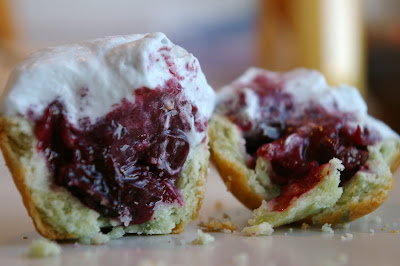
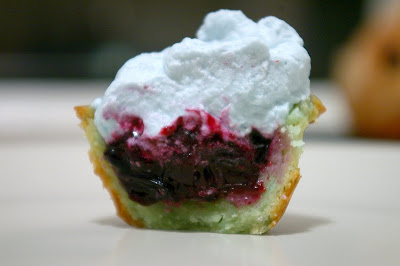
Now it’s safe to say that by making blueberry tarts, I was intending to bring something blue. That said, the tart dough came out green, the blueberry mixture was a deep shade of purple, and the whipped cream was…um, periwinkle. If you put them all together and mix them up, they’d probably make blue, though, right?

Anyway, what really matters is how they tasted….and that, my friends, was pretty darned good. Especially considering I made them without ever referencing a recipe, I was pleasantly surprised when I bit into one. The filling was slightly sweet, with still-intact blueberries bound together by a substantive but un-goopy sauce and a hefty dose of brandy. I’d make them again in a flash, if only to do the flambé part again!

I’ve posted the recipe below, as usual, along with two other recipes from last night’s event: cranberry bars and squash-pear soup. If you make any of these, it shouldn’t be tough to draw a hungry crowd.

Brandied Blueberry Tartlets
makes 22 tartlets

Tart Dough (adapted from Tartelette)

  • 1 1/2 cups flour
  • 1/2 cup powdered sugar
  • 1 stick and 1 Tbsp. butter
  • 1 egg yolk
  • 2 drops blue food coloring, if you’re so inclined

Blueberry Filling:

  • 1 pint blueberries, washed and dried
  • 2 1/2 Tbsp. sugar
  • 1 1/2 Tbsp. flour
  • 2 Tbsp. butter
  • a generous splash (1/4 cup) Brandy

Make Tart Dough:

  1. In food processor, combine butter, flour, and sugar. Blend until the mixture resembles coarse meal. Add egg yolk, and pulse until dough comes together. Wrap in plastic wrap and refrigerate at least 45 minutes, until no longer soft.
  2. Unwrap chilled dough and hit a couple times with a rolling pin to soften. Take thumb-sized pieces and press them into tartlet molds. Using your thumb and forefinger, press the dough up the sides of the molds.
  3. Preheat oven to 350 degrees.
  4. Now, make the blueberry mixture: In a shallow pan, combine butter and flour to make a roux (melt the butter and stir it around in the flour; this will thicken the blueberries). Add blueberries, and toss to coat. Add sugar and stir until dissolved. Now, add brandy, all at once. At this point, you can either: a) shake the pan around over a gas flame until the flame licks the edge of your pan and the brandy catches on fire, or b)take a match to the brandy and let it burn, baby!
  5. Once the flame has burned off all the alcohol in your brandy the blueberry mixture should be well emulsified and ready to use. Turn off the stove.
  6. Anchor the tartlet shells by piercing them a couple times each with a toothpick. This should prevent them from puffing up. Pre-bake the shells for 10 minutes, or until golden.
  7. Meanwhile, whip your cream (and add some blue food coloring if you want to be wacky).
    Fill baked shells with blueberry filling, and top with whipped cream. Don’t get them all over your face, now!

Cranberry Bars from Sara Rahnama

  • Makes 12-18 bars
  • 1 1/2 sticks unsalted butter, cut into 1/2-inch cubes
  • 2 cups whole wheat all-purpose flour
  • 1/2 teaspoon salt
  • 1 cup plus 2 tablespoons brown sugar
  • 3 cups fresh cranberries
  • 1/4 cup water
  • 1 tbsp lemon zest
  • Confectioners sugar for dusting
  1. Preheat oven to 350°F with rack in middle.
  2. Line a 9-inch square baking pan with parchment paper, leaving anoverhang.
  3. Blend butter, flour, salt, and 1/2 cup sugar in a foodprocessor until mixture begins to clump together. If the mixture is toodry, add up to 1 tbsp cold water. Press into bottom of pan.
  4. Bake until pale golden and sides begin to pull away from pan, 25 to 30 minutes.
  5. While crust is baking, cook cranberries, remaining 2/3 cupsugar, lemon zest, and water in a 2-quart heavy saucepan over mediumheat, stirring occasionally, until berries burst, 6 to 8 minutes.
  6. Pour cranberries over crust and bake until edge is golden, about 25minutes.
  7. When the bars have cooled completely, sift confectioners sugarover top. Lift out of pan using overhang and cut into squares.

Butternut Squash Pear Soup From Joey Loewenstein
(from Noteworthy Two, A New Recipe Collection from the Ravinia Festival)
Serves 6-8

  • 1 and ½ quarts chicken broth
  • 2 and ½ pounds butternut squash, peeled, seeded, in 2-inch pieces
  • 3 ripe pears, peeled, cored, quartered
  • 1 large onion, chopped
  • 2 medium shallots, peeled, chopped
  • ½ t. nutmeg
  • ½ c. half and half
  • salt and pepper to taste
  • 6-8 T. sour cream, optional
  • 1-2 t. cinnamon, optional
  1. In large pot, heat chicken broth. (We used vegetable broth and it worked great….so for all you kosher folks out there, vegetable broth works just fine!)
  2. Add squash, pears, onion, shallots,and nutmeg. Bring to boil. Reduce heat and simmer 30 minutes or untiltender.
  3. In food processor, puree mixture in small batches (OR, BETTER YET, GET A HAND BLENDER. TOOK ME 2 MINUTES! CAREFUL, THOUGH, NOT TOSPLASH! TURN THE BLENDER ON AFTER YOU PUT IT INTO THE MIXTURE).
  4. Return to pot, stir in half & half, salt & pepper. Cook over low heat untilhot. Serve with dollop of sour cream and sprinkle of cinnamon.
{ 2 comments }

A Brittle Perfect for Fall

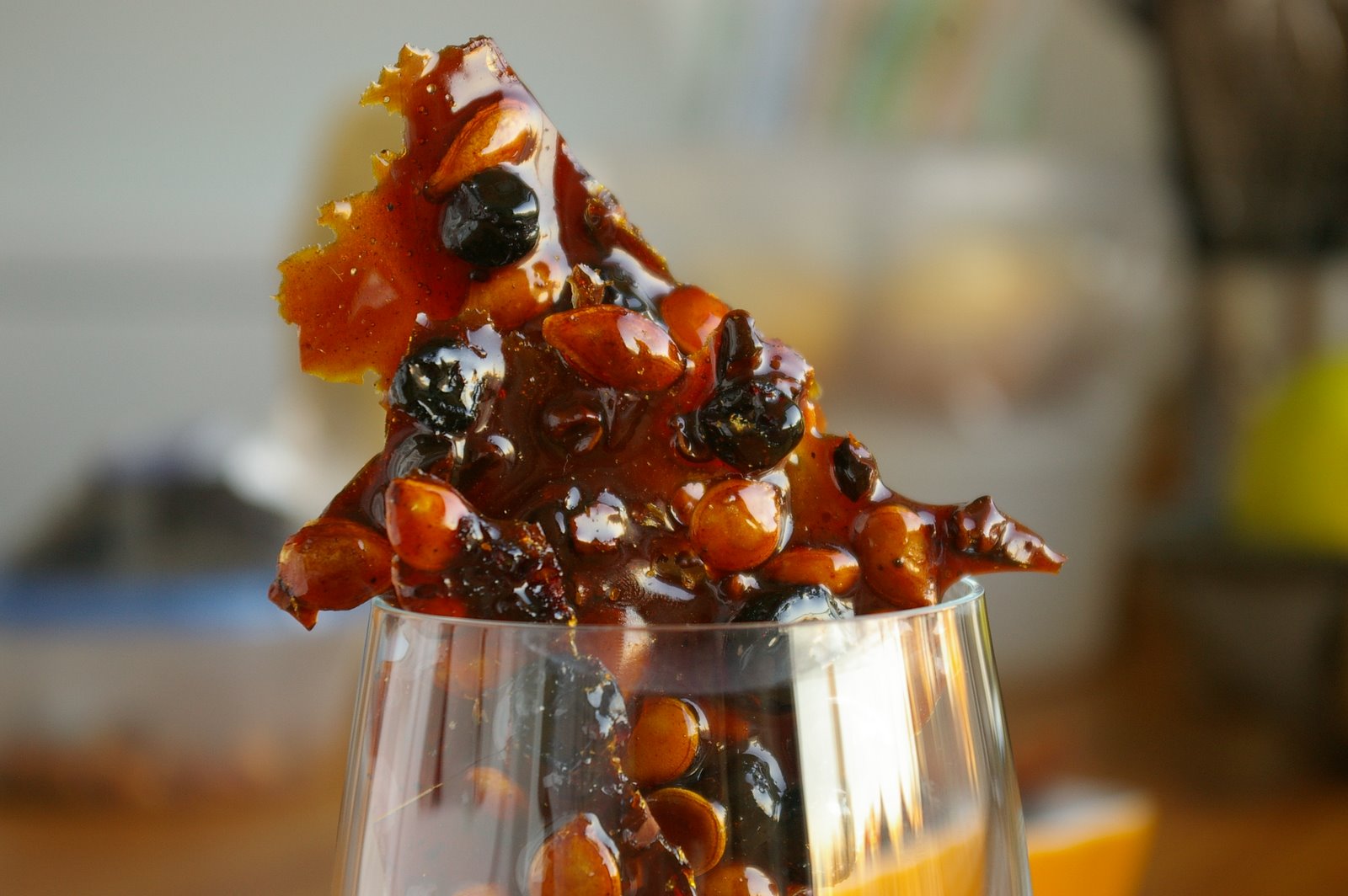
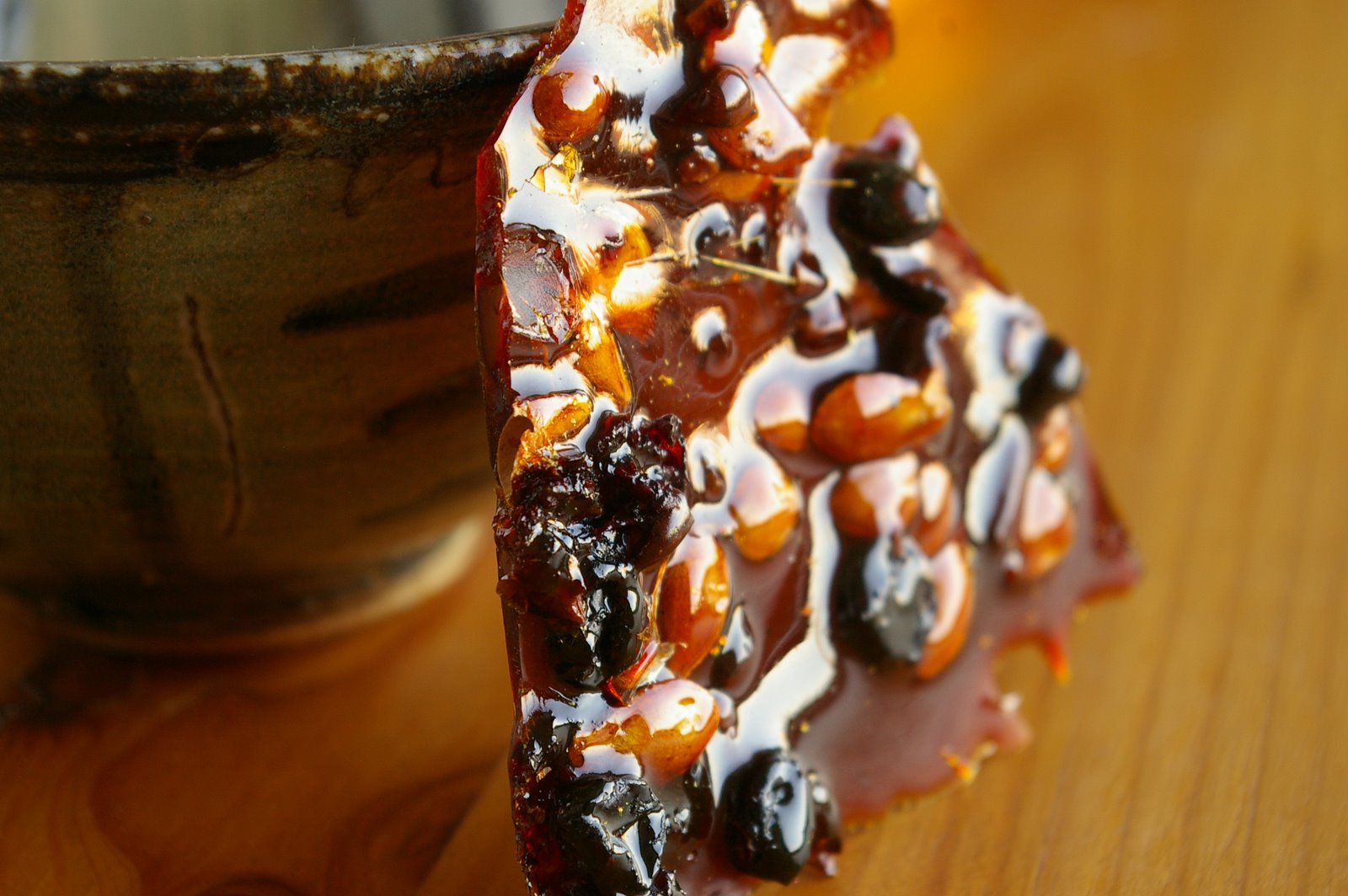
When a blogger-hero of mine, Danielle from Habeas Brulee, posted a while back about pumpkin seed cocoa nib brittle, I knew I’d be making it sooner or later. For starters, the recipe is uber-simple. Just combine sugar and water with a bit of cream of tartar, heat ’em up, let them turn golden, add the rest of the ingredients, and pour out onto a sheet of silpat (or, in my case, parchment paper) in a thin layer. The hardest part of the recipe is waiting for the brittle to harden before digging in.

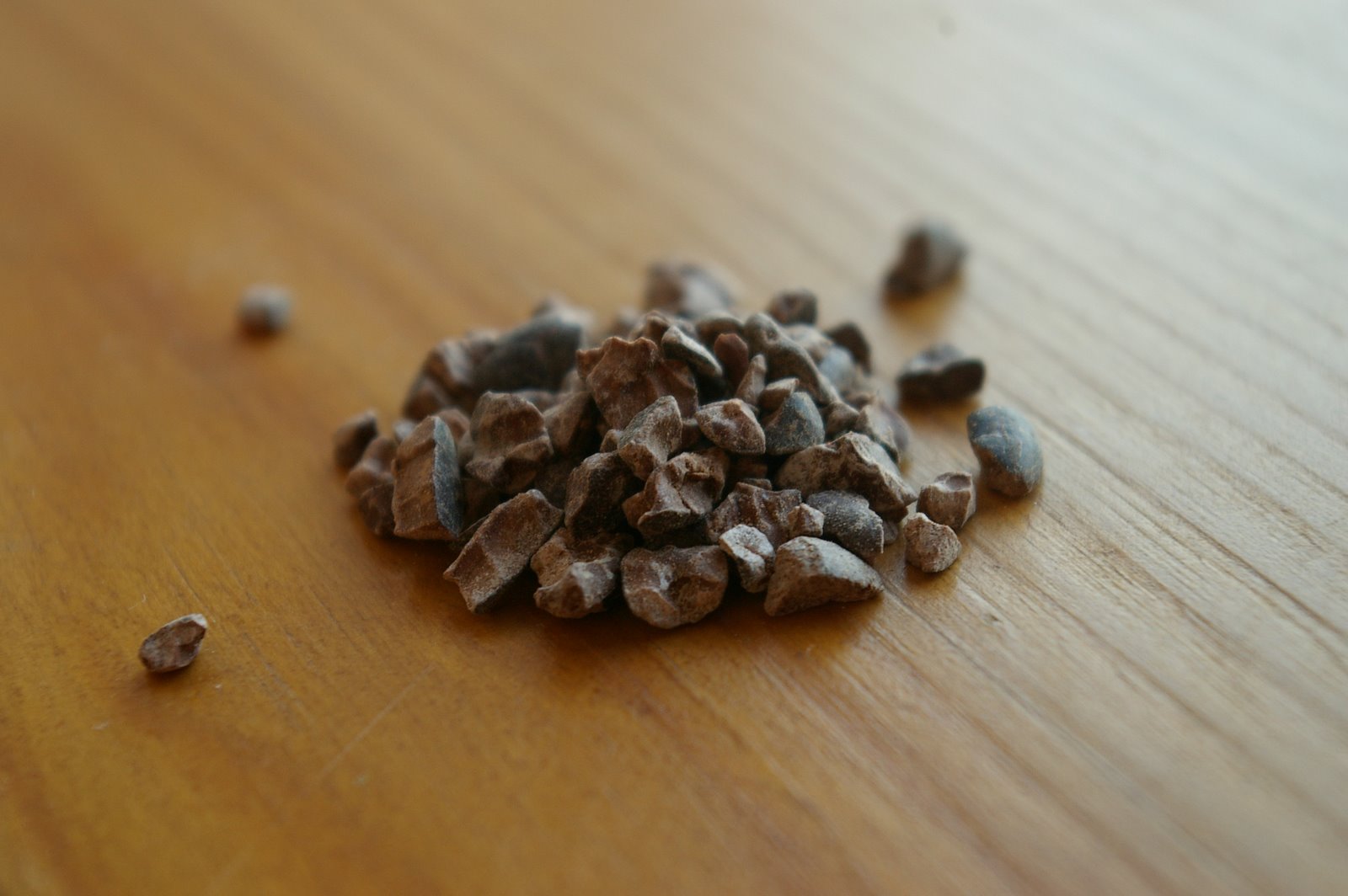
Even if it weren’t easy, this brittle would be worth making. The sheer fact that it contains cocoa nibs makes it absolutely to die for. Cocoa nibs are raw, unsweetened cocoa beans in little bits that are perfect for everything — including noshing.

In my experience, brittles made of just water and sugar (without butter or milk) are a bit too sugary for me. That’s why I decided to add some dried black currants, those perfectly tart berries with quite a bit of zing. In keeping with the other proportions, I added 1/4 cup. I really enjoyed their tartness, and they cut the sweetness exactly as I’d hoped.

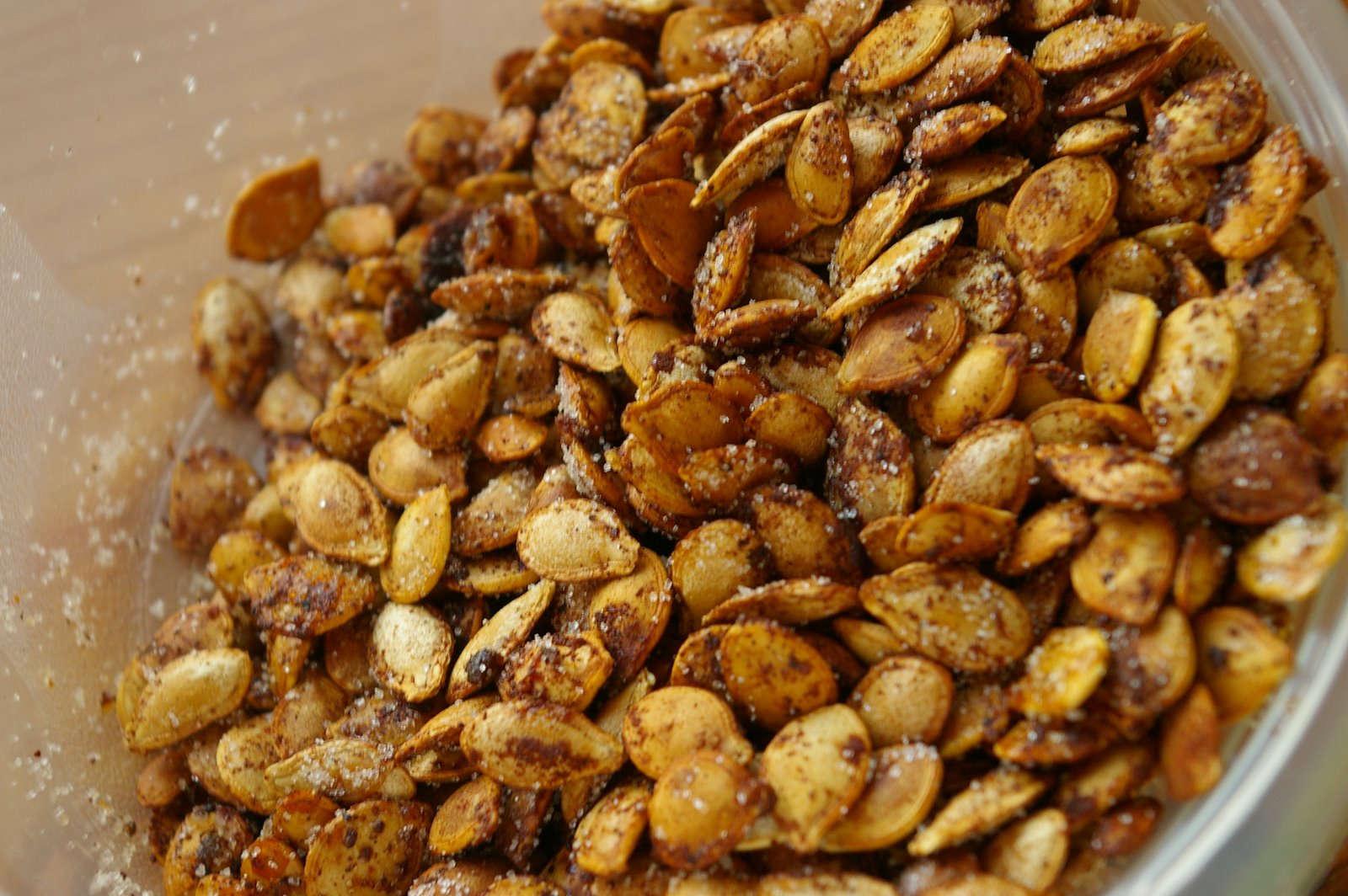
I also happened to have some already-roasted squash seeds, which had some sugar, salt, cayenne and cinnamon on them. They were perfect for this brittle, and I actually added a pinch of salt as well. It’s still super-sweet, and Danielle’s right — it would be perfect atop a cheesecake or some other less-sweet dessert. That said, this is one classic fall treat you’ll be sorry to miss.

Squash Seed Cocoa Nib Black Currant Brittle originally at Habeas Brulee
(adapted from Essence of Chocolate: Recipes for Baking and Cooking with Fine Chocolate</a> by Robert Steinberg and John Scharffenberger)
1/4 cup raw green pumpkin seeds
1/4 cup cocoa nibs
1/4 cup black currants (can sub other dried berries)
1/2 cup sugar
1/4 cup water
a pinch of salt
1/8 tsp cream of tartar
A pinch of cayenne

Toast the pumpkin seeds in a dry pan over medium heat, shaking very frequently, until they begin to pop. Set them aside to cool.

Set up a baking sheet covered with a Silpat or piece of parchment paper (something non-stick and flexible).

Bring the sugar, water, and cream of tartar to a simmer together in a small saucepan. Continue to simmer until it starts to develop a nice light caramel color that appeals best to you. Stir in the other ingredients, then quickly pour it all out onto the baking sheet and spread it thin as you can with a silicone spatula or wooden spoon.

Let it cool and harden before breaking off pieces to serve and devour.

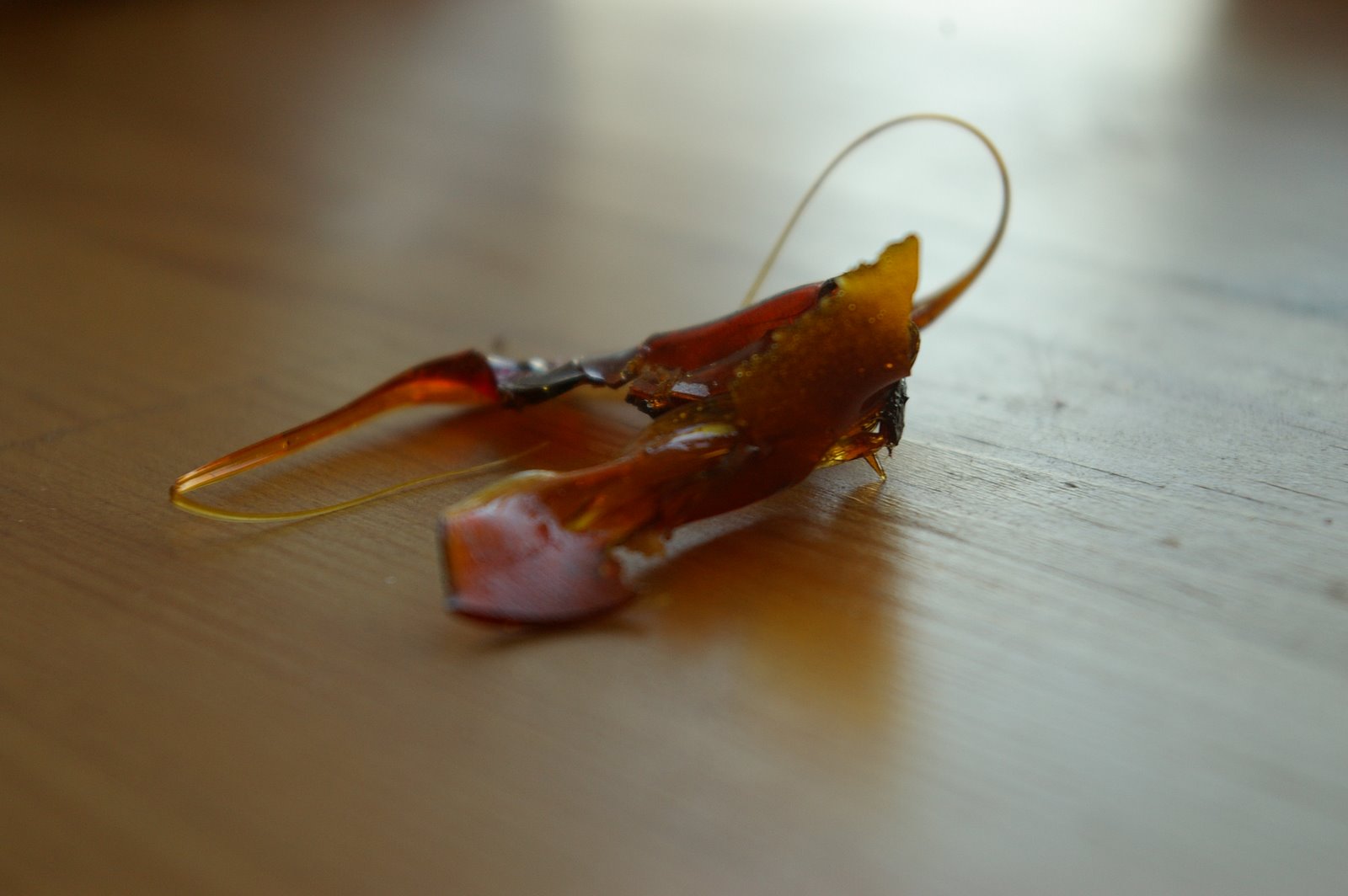
Or you can just play with the sugar while you wait….

{ 2 comments }

Vegetarian Chili with Green Beans

Veggie Chili was always a staple in my house growing up. We may not have had meat, but you know I’ve sung the praises of morningstar farms more than once, and chili brought out the best in MF’s “veggie crumbles.” Yea yea, it sounds really unappetizing, but trust me, it’s amazing. Obviously if you’re not restricted by vegetarianism, feel free to add all the BOEUF you desire. Morningstar will come through for the rest of us.

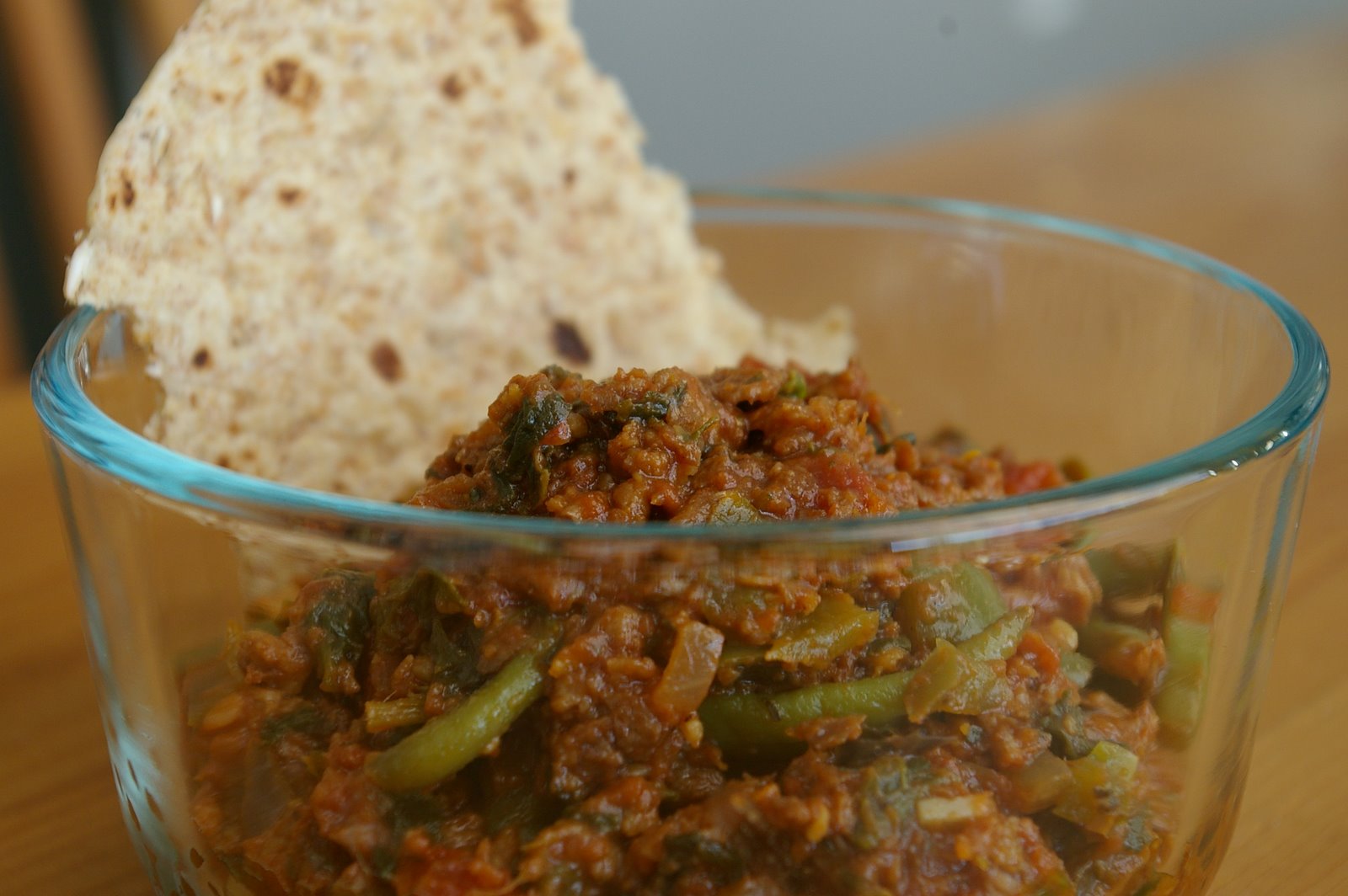
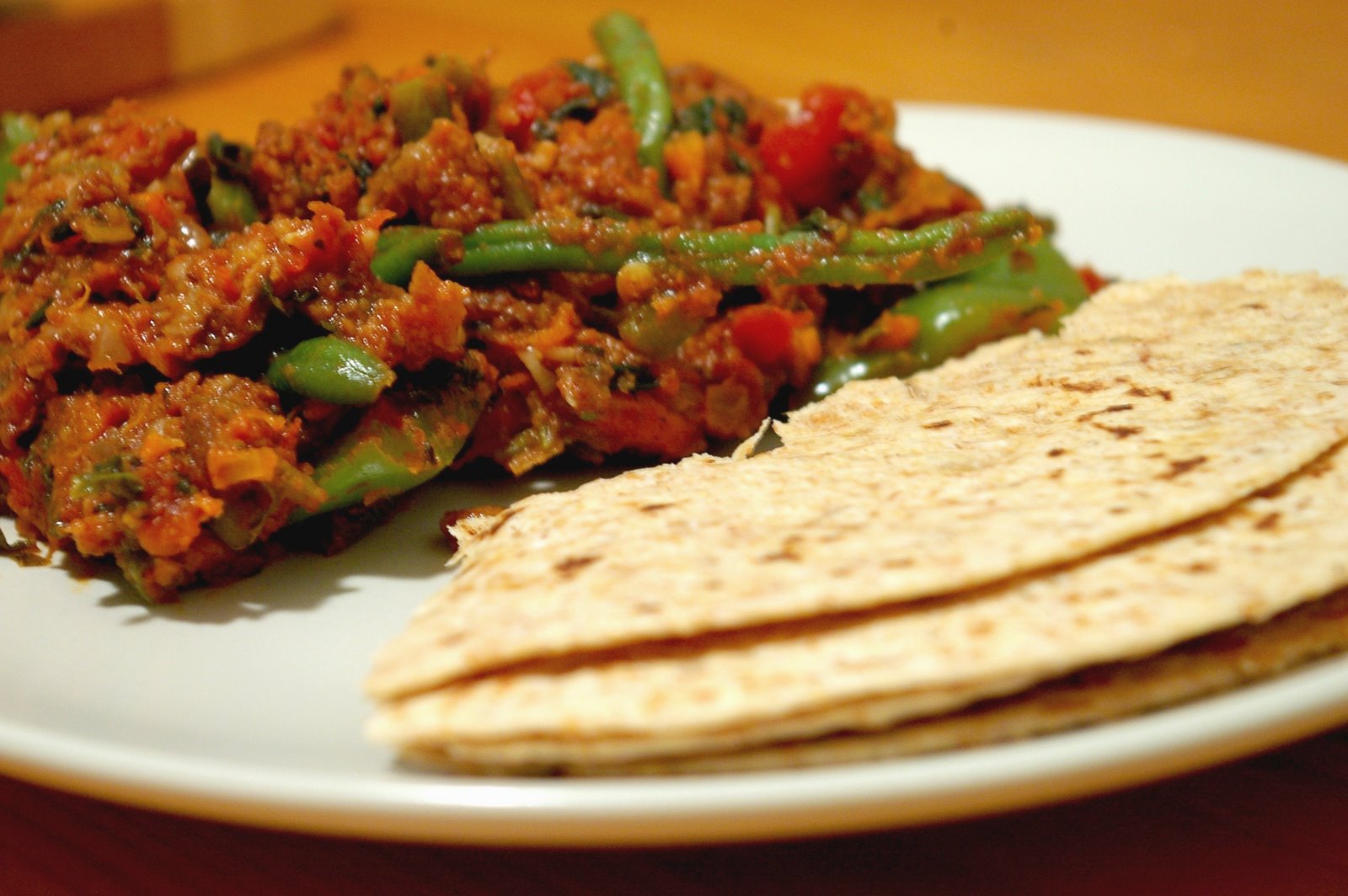
As usual, this falls somewhere between method and recipe. My standard veggie chili has garlic, onion, tomatoes, peppers, morningstar, white beans, and spices. This one had all of the above except no white beans — I only had black beans in the house. I also added a bit of sweet potato, since I had some baked, mashed, and in the fridge. I’d do that again in a flash: the sweet potato added subtle sweetness and earthiness to an otherwise typical Mexican veggie chili. Finally, I threw in some green beans and a bit of spinach at the very end, which made this chili a one-pot meal. Pop it on some whole wheat tortillas, and you’ve got dinner! Oy, I feel like Rachel Ray…


Veggie Chili with Green Beans
serves 2

1 jalapeno pepper
1/2 onion ( I used red, any will do), chopped
3 cloves garlic, peeled and chopped
1 package morningstar farms veggie crumbles OR 1/2 lb. ground turkey or beef
1 8 oz. can diced tomatoes
1 sweet potato, chopped and baked
1 1/2 cups green beans
1 cup spinach, chopped
1 green pepper

1 tsp. chili powder
1/4 tsp. crushed red chilies
1/2 tsp. cumin
1 tsp. coriander
a few springs of fresh cilantro
salt and pepper to taste

  1. In a heavy-bottomed pan, saute onions, garlic, and jalapeno in 2 Tbsps. olive oil.
  2. When onions are fragrant and soft, add veggie crumbles or meat, a bit more oil if needed, and all spices except cilantro, plus salt and pepper to taste. saute until thawed and/or browned.
  3. Add tomatoes, and toss to coat everything with their juices.
  4. Add sweet potatoes, green beans, and spinach, and continue to cook over medium heat until green beans are soft, about ten minutes.
  5. Finish with chopped fresh cilantro; serve with whole wheat tortillas. Enjoy!

{ 1 comment }

Pay it Forward

Believe it or not, there are a gazillion blogging events out there. From Daring Bakers, to “waiter, there’s something in my…” to “heart of the matter” to … gosh, they never end!

That said, I’ve found the event to end all events: Pay It Forward!

Here’s how it works: I will send a handmade gift to the first 3 people who leave a comment on my blog requesting to join this PIF exchange. I don’t know what that gift will be yet and you may not receive it tomorrow or next week, but you will receive it within 365 days, which is my promise! I also promise that it will be (at least partially) edible, and most definitely tasty. The only thing you have to do in return is “pay it forward” by making the same promise on your blog. Make sure you leave me an email address so that I can get your handmade surprise to you!Now that that’s done, please do yourself a favor and buy the scrumptious chocolates from Ghirardelli pictured above.. The bottom layer is chocolate, the top layer is white chocolate studded with peppermint bark….OH MY GOD they’re amazing! All kudos to Meryl and Benjy for making these a part of my life.

Ok, enough from me. 🙂

{ 0 comments }

Indian, round 1: Potato and Eggplant Curry


I know, I know. “Indian food? Scary!” But really, it’s not all that scary. Not if you have an endless list of totally obscure ingredients you’ve never heard of in quantities much larger than you’ll ever need, from the grocery store that’s farthest and most inconvenient to the rest of your life.

See? Not so bad.

Today I had a car, and I made sure to take extra-long at my doctor’s appointment. Read: I went to the Indian grocery store way the hell down Rockville Pike. I actually thought I’d missed it, and just as I sent a text to google asking where in the world “International Indian Supermarket” was (yea, that’s what it’s called. It’s Indian and International), I found the IHOP, turned left, and there, on the side of the pancake house, was a small slice of Indian heaven. Think curry leaves, dried papadum, dosai mix, whole nutmeg and turmeric and amchur (huh?) and lots of frozen dinners. Daunting? A little, but also ridiculously fun. I was a kid in a candy store. Only I didn’t recognize any of the candies. But still, candy store, people.

Here’s what I came home with:

1 package toor dal
1 package whole nutmeg
1 package brown sesame seeds
1 tub tamarind paste (crack, as far as I’m concerned. This stuff is amazing.)
1 jar garam masala paste
garam masala and chana masala powders
1 bag curry leaves
1 bag dried papadum
1 box dosai mix
1 large box saffron

True to form, I used only four of the above ingredients in the curry I made tonight, and I used them in proportions that an Indian food connoisseur would poo-poo. And by that, I mean that I made it all up.

But hey, it was edible! In fact, it was so edible that even D ate it. And when it came time to take seconds, she chose my odd creation over the palak paneer (spinach and cheese) from a package. So it really must have been pretty decent.

I’ll happily provide the recipe here, but as with most things I make, this “recipe” never really was a recipe as much as a taste-and-adjust experiment. The moral of the story is to always try new things, especially Indian food, because with Indian food, all the flavors on the plate are supposed to blend together — so if you accidentally over or under-season something, just mix it with something else until it tastes like something you want to eat. Kapish?


Potato, Yam and Eggplant Curry
serves 2, with leftovers.

2 large potatoes of any sort (I used regular old baking potatoes), in chunks
1 sweet potato, in chunks
1 small eggplant (I used most of one Japanese eggplant), in chunks
1/2 a tomato, diced
1/2 a red onion, diced
2-3 small curry leaves
1 1/2 tsp. garam masala paste
1 Tbsp. tamarind paste
1 Tbsp. sugar
peanut oil (veg. oil is fine)
salt to taste

  1. Add 1/3 cup peanut oil to a heavy-bottomed pan. Add garam masala paste, curry leaves and diced red onion. Saute until translucent.
  2. Add potatoes, and toss to coat with seasoning. Saute five minutes.
  3. Add eggplant, and toss to coat. Saute 2 minutes.
  4. Add water by the cupful (I added about two cups), until curry stops sizzling. The idea here is to bring the water to a low boil, and allow it to cook of gradually. This will create a sauce with concentrated flavor, and it will also allow the potatoes to cook through.
  5. When the first round of water is mostly evaporated, add a cup or two more and keep cooking. Continue this process until potatoes are easily pierced with a fork; then allow the water to boil down to a thickened sauce.

Raita
makes 1 cup.

1 cup yogurt
1 tsp. salt
2 Tbsp. finely diced onion
finely diced cucumber and carrot, optional

Combine the above ingredients and serve as a condiment. It offers some relief from the heat (temperature) and heat (spice) of the curry.

{ 1 comment }