≡ Menu

Maple Walnut Oatmeal with Peaches

maplewalnutoatmeal1

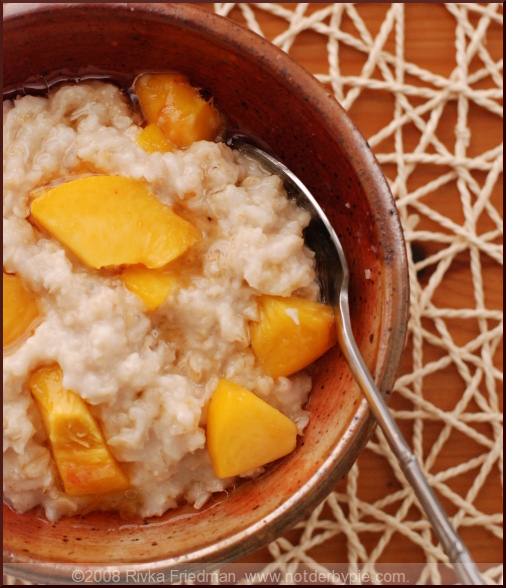
My breakfast habits usually vary from season to season. I tend to alternate between Terri and Kendall’s go-to oatmeal recipe (oats, water, agave syrup, wheat germ, and flax seeds) and toast with an egg and fake bacon during the winter. During summertime, though, it’s all about yogurt. There are few things I love more than yogurt — especially that uber tart and rich stuff that I make at home — and I eat it very, very often during the hot months. Until this week. See, I bought a little container of good organic yogurt and a gallon of organic whole milk, stepped up on a stool to pull down my yogurt maker from its above-the-fridge hiding place, and set out to make some yogurt, but for some reason, the batch emerged looking nothing like yogurt and everything like watery curds. My big yogurtFAIL kind of killed my buzz. That’s when I remembered the half tub of oatmeal leftover from wintertime, sitting on the fridge all by its lonesome. So I threw some in the microwave and called it a morning.

maplewalnutoatmeal2

But then I decided, as long as I’m breaking my breakfast routine, I may as well go nuts. I remembered something a friend once told me, about how oatmeal can actually be a thoroughly luxurious food. Channeling her mention of luxury, I added a generous tab of butter I got at the farmers’ market last week to my oats and water. After heating the oatmeal through, I tossed in some fresh cut peaches, a glug or two of really good milk from the market, a teaspoon or so of maple syrup, and — wait for it — just a slight drizzle of walnut oil. The result was simply divine. The walnut oil played up the nutty sweetness of the maple syrup, while the subtly sweet richness of the butter and milk provided contrast for those perfectly bright peach slices. I don’t usually do double-flips over oatmeal, but this is one recipe that’ll have me reaching for that tub of oats, even when there’s edible yogurt in the fridge.
[click to continue…]

{ 5 comments }

Feta Phyllo Torte

feta-phyllo-1a

Feta Phyllo Torte

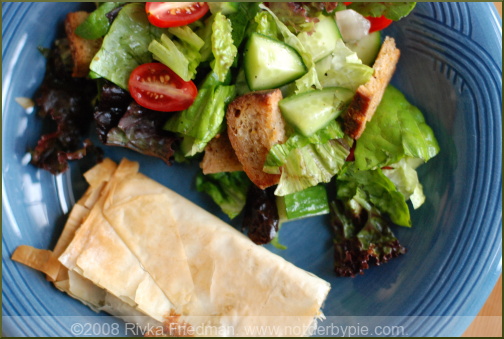
Of all the incredibly culinary feats out there (and there are plenty), one of which I’m truly in awe is the ability to consistently serve vegetarian food that fees like a main dish. As I’ve written before, one of the challenges to purely vegetarian cooking is that often, everything on the table looks like a side dish, and there’s no one thing that, when brought to the table, elicits the oohs and ahhs of, say, a whole roast chicken. There are a few people who are particularly excellent at this. One is Deborah Madison, author of Vegetarian Cooking for Everyone (one of my favorite cookbooks to read; I often find myself leafing through it while killing time at Barnes and Noble). Madison understands the challenge of creating a “wow factor” when serving vegetarian entrees, and she conquers that challenge seemingly effortlessly. Her books are endless sources of inspiration for meatless entertaining.

feta-phyllo-1

Another, though she may not intend to be (given her well-publicized love of meat) is Melissa Clark, a food columnist for NYT and recipe writer extraordinaire. Reading Melissa’s column, I not-infrequently stumble upon a really new idea for a vegetarian entree. One excellent example is her cornbread and broccoli rabe strata, a vegetarian Thanksgiving main that doubles as a side for the turkey eaters. Another, for a phyllo feta torte, was published just a couple weeks ago, and after reading her recipe, I had an undeniable urge to rush into the kitchen and make it, immediately.
feta-phyllo-2

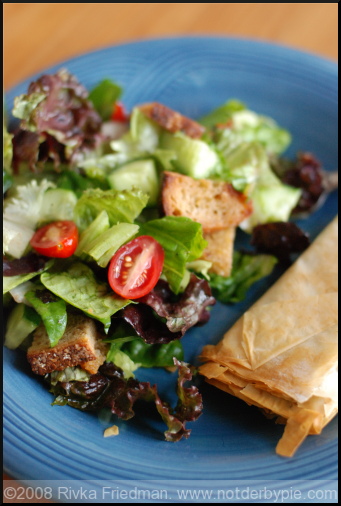
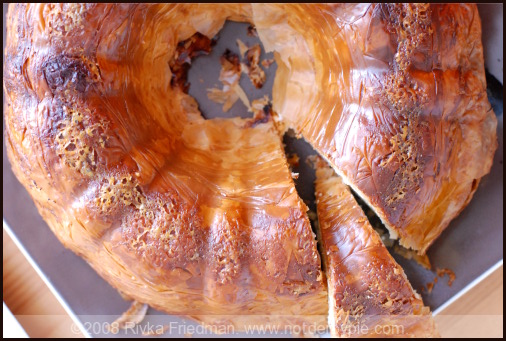
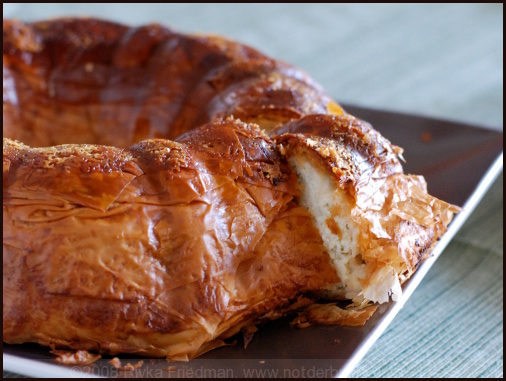
Originally called “No-fear Phyllo Torte,” Clark’s recipe originates in a dinner party hosted by a lauded French literature professor and his Greek wife, for whom phyllo is second-nature. Clark claims intimidation, but her recipe proves her an equal master of this domain. In the torte, made in a bundt pan for a particularly impressive presentation, thin, crisp layers of butter-soaked phyllo cloak a tender filling of feta, cottage cheese, dill and nutmeg. Sound like a spinachless spanikopita? Think again: the finished product is drizzled with honey before serving, for an irresistible hit of sweet to balance the rich, salty torte. Stop me from drooling.

feta-phyllo-3

Clark was intimidated when she first saw the torte emerge from the oven, and wondered whether she needed to be Greek in order to make it successfully; I had an all-out panic attack when, just before serving the torte, I realized that I had used salted butter in place of the unsalted butter called for in the recipe. It didn’t matter; I had used less salty Greek feta in the filling, which offset the extra salt in the crust. Other changes I made to Clark’s original recipe include swapping out some of the cottage cheese for extra feta (since cottage cheese generally gives me the creeps, and 3 cups sounded like a lot), upping the level of dill and nutmeg for added kick, and cutting the butter from 3 sticks to 1 (because who needs 3 sticks of butter in anything? and 1 was more than enough to coat the whole torte and make the insides crispy). Other than those changes, I found this recipe absolutely to die for and would make it again in a flash. I actually served it with some homemade rhubarb chutney, which I’ll blog in a future post, and I was really pleased with the combination. The tanginess of the rhubarb brought out the acidity in the feta and the chutney provided a nice textural contrast to the torte. An all-out thumbs up from this happy eater — I recommend you give this a go; your guests will be thankful — and maybe even intimidated.
feta-phyllo-4

Sonia’s Phyllo and Feta Torte with Dill and Nutmeg
Time: An hour and a half, plus cooling
adapted from Melissa Clark, inspired by her husband’s friend’s wife Sonya, via The New York Times

Time: An hour and a half, plus cooling

1 1/2 pounds Greek feta cheese, crumbled (I used feta from a local Mediterranean market, but TJ’s carries Greek feta that’s pretty good)
2 cups cottage cheese
3 large eggs
1/3 cup chopped fresh dill
1/4 cup grated Romano cheese (I used Parmesan, which was what I had on hand)
1 teaspoon freshly grated nutmeg
1/2 teaspoon freshly ground black pepper
1 1-pound box phyllo dough, thawed overnight in refrigerator if possible
1/2 cup (1 stick) unsalted butter, melted

Greek honey, for serving (Clark says this is optional but I say it’s a must).

1. Heat oven to 375 degrees. combine feta, cottage cheese, eggs, dill, 2 tablespoons Romano, the nutmeg and pepper in a food processor and pulse just to combine (Clark says you can also use a large bowl and a fork). Clark also says the mixture should be chunky, but I made mine smoother.

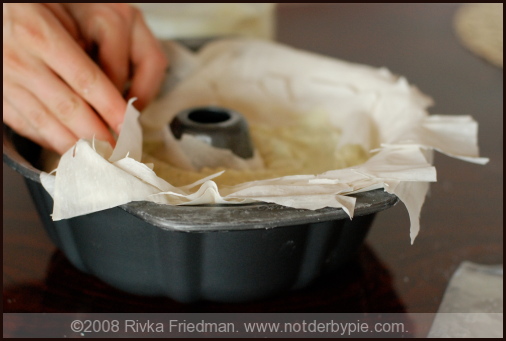
2. Sprinkle remaining 2 tablespoons Romano into a Bundt pan. Drape a sheet of phyllo on top of Bundt pan, poke a hole into phyllo with your finger where center tube is and push phyllo into pan to line it. Do this with another phyllo sheet, but place it perpendicular to first sheet. The first couple of sheets will seem disorderly and may collapse some, but as you start layering them, the process will get easier and the sheets will keep their shape. Continue adding phyllo sheets in alternating directions until all sheets are used. Edges of phyllo should hang over edges of bundt.

3. Scrape cheese filling into pan, and fold edges of phyllo over filling. Using a sharp knife, poke many holes (at least 20) in dough that reach all the way to bottom of pan. Then pour melted butter over the torte; some will seep into holes, but a fair amount will pool on top of torte, which is fine. I actually poured the butter before poking the holes, and my torte tasted perfectly delicious, so fret not.

4. Place Bundt pan on a baking sheet and bake for about 1 hour 15 minutes, or until torte is puffy and golden brown. Allow torte to cool in pan for 1 to 2 hours before inverting onto a plate and slicing. Serve warm or at room temperature, with honey and/or sweet chutney.

Yield: 10 to 12 servings.

{ 16 comments }

Sardine and Fava Bean Bruschetta

fava-sardine-1

I can’t remember if I’ve ever written a love song to favas on this blog. I mean, I’ve written about them, but I probably haven’t sung their praises as much as they deserve. Starting in late May, I bother the farmers at my local market every Sunday, trying to subtly nudge them to pick their favas as soon as they’re ready so I can dig in. The first few weeks, I’m met with transparently frustrated replies of “they’re not ready, lady!” but around the second week in June, out they come. From them on, you’ll find me and my tote bags by the fava bin. That’s right.

Favas come double-wrapped, so to speak; they’re tucked in a waxy coating that’s nestled inside a pod. To eat favas, you pop open the pods, scoop out and blanch the beans, and then remove the outer shell. Work intensive? Yea, but you won’t find me complainin’. Favas are sweet and green and, with a little salt and not much else, the delicious essence of early summer.

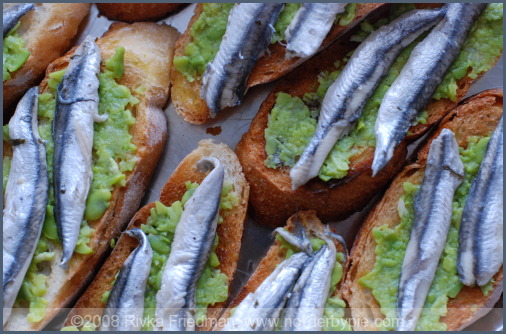
While I usually just toss my favas in a salad or mix them with some pasta and other vegetables, I also really like fava bean spread. Mine is smooth enough to spread but still quite chunky, and laced with a whole lot of garlic and a squeeze of lemon. If I don’t finish it all before using it, I’ll spread it on a baguette and eat it just so. Or, if I’m really feelin’ it, I’ll top my bruschetta with some vinegar-and-oil-cured sardine fillets. The idea came to me from an Epicurious recipe for cannellini and sardine bruschetta. I love cannellini, but I don’t stock my pantry with dry or canned beans when fresh ones are so readily available during the summer, so I subbed in favas for the cannellini the recipe called for. The combination worked perfectly: the headiness of the garlicy fava spread stood up well to the sardines, which added just the right amount of richness and tang. Toasted baguette, more than a vehicle, was crunchy and light, a fine contrast for the favas and sardines perched atop it. I finished off the bruschetta simply, with a bit of olive oil and a grind of the pepper mill. It didn’t need much else.
[click to continue…]

{ 2 comments }

Linguini with Artichokes and Sweet Peas

pastapeas3

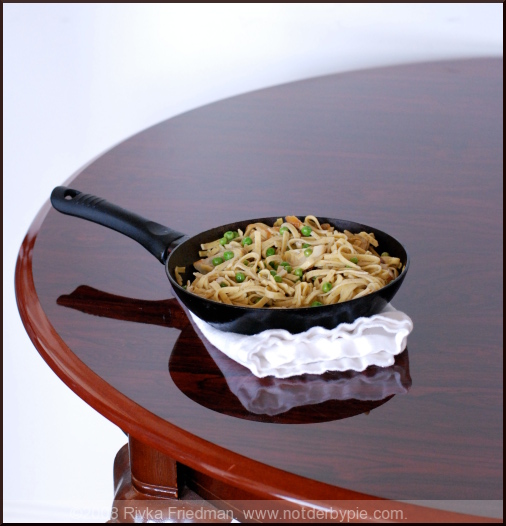
Here’s another round of my “weekday lunch” series, where I offer recipes that’ll make your colleagues green with envy.

Peas are one of those foods that have completely changed for me since I started shopping at the farmers’ market. In regular grocery stores (that aren’t Fairway, Whole Foods or Dean and Delucca), it’s pretty rare to find whole peas in the pod. If you want peas, you’re likely headed for the frozen section or even the canned section (though I really think that frozen peas are 100x better than canned). The first time I saw peas at the farmers’ market, I was mystified: peas come in a pod, with a couple of teeny leaves on one end — and unlike canned or frozen peas, they’re completely raw.

pastapeas4

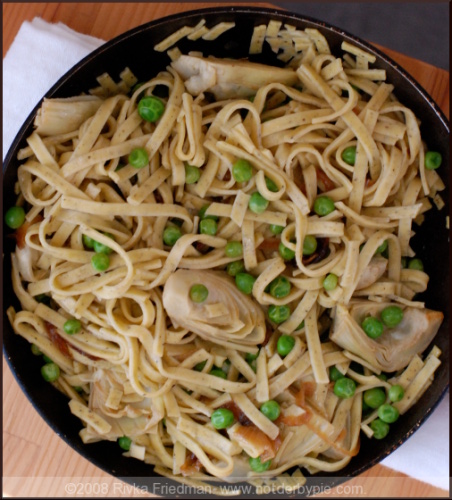
I’ve now made this recipe twice, and I can assure you that raw peas really make all the difference. These pictures are from the time I made it with frozen peas, and you can see that the peas are kind of shriveled in places; that’s because frozen peas are already cooked, so even a quick blanch or a toss in the pan makes them soften and shrivel. When using raw peas, you can do a super-quick blanch or saute and still keep the integrity of the peas shape. And that’s not to mention how much sweeter fresh peas are! They actually taste like….peas. It’s wonderful.
[click to continue…]

{ 2 comments }

cherrypit1

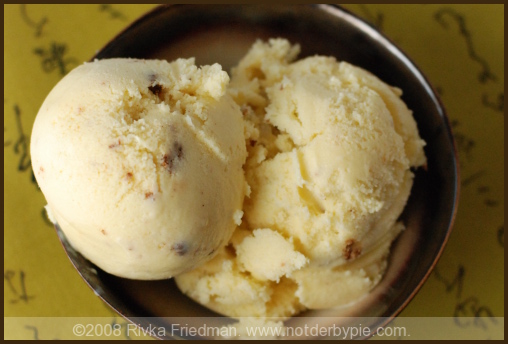
Well, you’ve caught me red-handed. Not two weeks after I confessed my inclination toward only the purest of ice cream flavors when making it at home, I’ve gone stir crazy. First, I went nuts on vanilla by adding drizzles of chocolate; then I made maple ice cream (which, alas, was devoured before I could even get out my camera, but I’ll pass along the recipe at the bottom of this post for interested souls). Now I’m really pulling out the big guns. Cherry Pit Ice Cream? What exactly was I thinking?

I’ll tell you what. I was thinking that I’ve been reading about cherry pit ice cream since last year, and the strangeness, the sheer absurdity, piqued my curiosity and eventually won me over. People say it’s the best flavor of ice cream they’ve ever tasted, and all it is is milk, cream, sugar, eggs, and crushed cherry pits. Tell me you’re not curious! Who even knows what a cherry pit innard tastes like?

[click to continue…]

{ 3 comments }

Classic Mac and Cheese

macncheese5

As you all know by now, D’s made lots of culinary concessions for the sake of our relationship. In the four-plus years we’ve been together, she’s become someone who appreciates good food far more than I ever thought she would. So this past week, I felt inspired to acknowledge that by taking a couple of steps in her direction and finally trying my hand at macaroni and cheese.

macncheese2

I’ve been meaning to make mac and cheese for quite some time. After seeing Ina Garten make it several months ago on her FN show, Barefoot Contessa, I knew it wouldn’t be difficult to make. Then I saw that show rerun like four or five times (ok, Ina, I get it!) and decided to give it a go. The method is simple: heat flour and butter to make a roux. Add milk and mix to combine, then continue stirring until the milk is thickened. Add lots of cheese, stir until it melts, then incorporate cooked and drained macaroni. Optional step: transfer macaroni to a gratin, add some very optional tomato slices, top with buttered bread crumbs, and broil until bread crumbs are golden and crunchy.

macncheese6

[click to continue…]

{ 6 comments }

Pesto Streudel and Panzanella Salad

panzanella1

Now that it’s summer, my counters are teeming with beautiful red tomatoes and my fridge is packed with brightly-colored produce of all sorts: radishes, favas, beets, strawberries, you name it. It’s a welcome change from the endless supply of potatoes, yams, potatoes, and kale, oh, the kale. Thank goodness I’ve got some red back in my life!

favas

fava-shells

Of course, with beets and radishes come a whole new type of greens — the kind attached to the stems of the beets and the radishes, of course. Both are too often overlooked — especially radish greens, for which I’ve never seen a recipe. Until now.

panzanella2

Here’s the thing. Pesto? It doesn’t just have to be basil in there. Stick in some cilantro and call it chimichurri or — better yet — send some radish greens under the knife and start to enjoy what too often ends up in the disposal (or, in my case, the compost bin. Yay!)

Radish greens are best used within a couple days of buying or picking them, so they’re a bit more finicky than basil. But they’re spicy and a little bitter like arugula, and quite flavorful. They’re also almost always attached to the radishes you buy, so why not use them? I’ve blended them up with walnuts and pinenuts, and they pair beautifully with both. But I’ve got a lingering curiosity about how they’d play with pecans, so if you try it, lemme know.
[click to continue…]

{ 1 comment }

Avocado Tomato Salad

avocado-tomato-salad-4

summer-produce-1

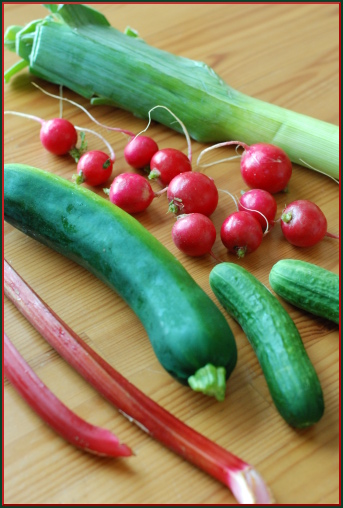
It’d be a shame to spend too much of this day indoors, because it’s beautiful outside and I have an all-day pool pass — so I’m going to keep this short: It’s summer, people! That means I’m barely to be seen at the grocery store, stocking up on fruit and veggies almost exclusively at the three nearby farmers’ markets to supplement my CSA. I’m high on summer produce.

avocado-tomato-salad-2

Avocados and tomatoes are especially excellent right now. Tomatoes haven’t quite hit their peak, but I picked up some beautiful heirlooms this morning and we enjoyed them in salad, with a bit of salt and not much else. Last week, I had some beautiful on-the-vine tomatoes in the house, as well as some perfectly ripe avocados and some baby lettuce from a friend’s garden, so I threw together a really simple salad that’s definitely going to be a staple on my plate this season. It’s just lettuce, avocados, tomatoes, a crumble or two of my usual Keswick Creamery feta, and some lemon, salt, and pepper. It doesn’t get much simpler or better than that.
[click to continue…]

{ 1 comment }